Showing posts with label Molecular biology. Show all posts

Thursday, August 5, 2010

A tale of enzymes and sun

By Martín Bonfil Olivera

Published in Milenio Diario, august 4, 2010


Sometimes, evolution plays dirty.


Once upon a time there was a planet (ours) where, about 3.5 billion years ago, life emerged. But the first cells confronted a problem: their star emitted, apart from visible light, a respectable amount of ultraviolet rays. And this high energy radiation normally damages complex molecules, like the nucleic acids that store the genetic information. The result: mutations and death. Life was tough in those days.


In the course of evolution, millions of years later, photosynthetic organisms that released oxygen (O2) emerged. About 2.4 billion years ago, the Earth's atmosphere was became full of this gas. Part of the oxygen, high in the atmosphere, reacted to form the famous ozone layer (O3), that protects us today – although not fully– from the excess of ultraviolet radiation.


But evolution could not wait for an ozone layer. Way before that, some adaptations emerged to repair the damages that ultraviolet light caused in the cell's DNA. One of the most efficient ones was the enzyme photolyase: a protein that, activated by the visible light from the sun (hence the suffix,"photo"), reverts the damage in DNA (specifically, it breaks thymine dimers: abnormal bonds between two "steps" of of the spiral ladder of the double helix, so that when genetic information is copied into the next cellular generation, it causes mistakes: mutations).


Photolyase was so successful that today it is found in almost every living organisms: bacteria, fungi, plants, fish, insects and some mammals, like marsupials (such as kangaroos, which carry their immature babies in their bags). But -and here comes the cruel evolutionary prank– something happened along the way. One of the branches of the tree of life suffered a mutation that eliminated the photolyase genes. As a result, humans, and all other animals with a placenta (placentals), lack photolyase, thus making us more susceptible to skin cancer. This is why we depend on sunscreens when we go to the beach or when we walk in the street in sunny days.


Fortunately, last week, Nature magazine published the work of a Chinese researcher, Dongping Zhong, and his team, from Ohio State University, in Columbus, where they describe the detailed molecular working of the repair mechanism of photolyase from the fruit fly Drosophilia melanogaster. With this and other studies, it is possible to visualize the use of this enzyme in creams that protect us from skin cancer by repairing the damages that ultraviolet light causes in the DNA of our skin cells (it has been demonstrated that photolyase can be applied to the skin inside liposomes –fat vesicles– in in the form of cream and has protective effects).


Basic science thus gives a possible solution to an evolutionary injustice. All in the name of a good tan.

(translated by Adrián Robles Benavides)

To receive Science for pleasure weekly
in your email, subscribe here!

Wednesday, October 21, 2009

An award for Cotija cheese

By Martín Bonfil Olivera

Published in Milenio Diario, October 21th, 2009


Last week we talked about the Chemistry Nobel prize, awarded for the solving of the structure of the ribosome, the cell's protein factory. Today let's talk about Cotija cheese.


There's a link. Bear with me: an investigator from the Chemistry School at the National Autonomous University of Mexico (UNAM), Dr. Maricarmen Quirasco, and her master's-degree student Alma Berenice Zúñiga, have just won the National Award for Food Science and Technology, given by Coca-Cola and the National Council for Science and Technology (Conacyt), a study in which they identify and characterize the main microorganisms that live in the Cotija cheese.


Microbes in a cheese? If you're a fan of this appreciated cheese, which has been hand-produced for 450 years by about 200 families in the Jalmich mountains, close to Cotija, Michoacán, you could worry about this. Don't. The study by Quirasco and Zúñiga seeks a better understanding of the manufacturing process of this aromatic and nutritive cheese (in another study, the same group discovered it has healthy antioxidant properties), in order to protect it and improve it.


The thing is, the production of almost any cheese needs the so called lactic bacteria, which turn milk sugar (lactose) into lactic acid. This increases acidity and causes the milk proteins to curdle, thus transforming into cheese. Many other dairy products, such as yoghurt, are also teeming with microorganisms.


But in the manufacturing of the Cotija cheese, made with non-pasteurized milk, there's an actual microscopic ecosystem living there, in which there is competition between species and survival . To study it, Quirasco and Zúñiga used modern molecular techniques: they studied the ribosomal RNA genes –the main component of ribosomes, here's the link– from bacteria. These genes are used to identify species because all cells have ribosomes; when comparing them, their differences are detected and make it possible to identify them.


The study revealed that, during the ripening process of the cheese, which takes from three months to one year, the competition wipes out all possible pathogen bacteria, which guarantees the cheese's hygiene. And the knowledge gainwill allow, in the future, to standardize the production process and to help manufacturers obtain the "denomination of origin" (Protected Geographical Status), with which they could fight unfair competition from "Cotija type" cheeses, some of them even coming from abroad, that are supplanting the original.


In other words: first-class food science, done at UNAM, that will benefit Mexican producers.


(By the way, you are not necesarily interested in this, but Maricarmen Quirasco and yours truly were together when studying pharmaco-biological chemistry at UNAM, and I admired her great intelligence and dedication to work since the time we studied at National High School number 6. Honestly, congratulations Maricarmen! Read her article of the Cotija cheese, here)

(translated by Adrián Robles Benavides)

To receive Science for pleasure weekly
in your email, subscribe here!


Wednesday, October 14, 2009

The amazing ribosome

By Martín Bonfil Olivera
Published in
Milenio Diario, October 14th, 2009

The chemistry Nobel prize thrilled me even more than the one for Medicine.

It was given to Venkatraman Ramakrishnan (Hindu, nationalized American, but living in Great Britain), Thomas Steitz (United States) and Ada Yonath (Israeli) because of "their studies about the structure and function of the ribosome".

If, like I mentioned last week, enzymes are amazing molecular machines that practically carry out all the functions of a living cell, ribosomes are an real automatized factories that manufacture, with absolute precision, each one of the thousands of different proteins we need to be alive.

A ribosome is a complex structure made of ribonucleic acid (the one-strand cousin of DNA) and many proteins.

It has some fixed parts, and other that move with robotic precision to assemble, in a matter of minutes, and from reading the information coming from DNA, proteins made up by thousands of amino acids, strung together as pearls in a necklace.

The achievement of the Nobel winners was to localize with great precision each one of the hundreds of thousands of atoms that form a ribosome, and this has allowed them to understand their functioning in atomic detail. They used X ray crystallography, a technique developed in the beginning of the 20th century (and the same one that allowed Watson and Crick to discover the DNA double helix structure in 1953 --a structure, I might add, infinitely simpler than a ribosome).

To achieve this, they first had to obtain perfectly arranged crystals formed by pure ribosomes. It took them almost 20 years.

But to see atoms, one cannot use an optical microscope, not even an electron microscope. Only X rays have the necessary finesse. And no lens can focus them to form images: you have to gather the group of stains formed as the X rays travel through the crystals (originally the stains were captured on photographic film, but today they are captured by a couple charged device or CCD, the invention that this year won the Physics Nobel prize) and using computers to mathematically process data.

The result? Computerized models that reveal, with a very high level of detail, each screw and bolt of these wonderful molecular nano-factories.


As an additional benefit, these models are allowing scientist to develop new antibiotics that work like monkey wrenches tossed into the ribosomes of bacteria that make us sick.

Yes, I loved this year's chemistry Nobel. Too bad that Harry Noller, one of the giants of ribosome research, was left out of the prize, which can only be given to three persons.

(translated by Adrián Robles Benavides)

To receive Science for pleasure weekly
in your email, subscribe here!


Wednesday, October 7, 2009

The Nobel telomere

By Martín Bonfil Olivera
Published in
Milenio Diario, October 7th, 2009

Nobel prizes are always exciting. This year's Physiology or Medicine prize reveals fascinating basic science about our cells which might have revolutionary applications in health.

It was awarded, according to the Nobel committee at the Karolinska Institute in Sweden, "for the discovery of how chromosomes are protected by telomeres and the enzyme telomerase", a discovery made by investigators Elizabeth Blackburn, her colleague Jack W. Szostak and her student Carol Greider.

The genetic information of living beings is written in the molecule of deoxyribonucleic acid, DNA, which form tangles called chromosomes within the nuclei on each of our cells.

Each chromosome is formed by a single, very long, DNA molecule. When it has to be copied, before the cell divides in two, the task is performed by an enzyme molecular machine made of protein.

Picture it like this: the famous DNA double helix is like a train railway. To copy it, both rails are separated and the enzyme slides over each one, reading the letters that form it and inserting the corresponding letters on the other side. Like a little train that advances in a rail, constructing the opposing rail. In the end, we have two complete and identical railways.


(http://www.youtube.com/watch?v=hfZ8o9D1tus)

But when the enzyme reaches the end of the rail, it cannot advance any longer, and does not construct the last span of the opposing rail. Each time that a chromosome is copied, their tips (telomeres, from the greek telos, end, and meros, part) would shorten!

Using a very ingenious experiment, Blackburn and Szostak discovered in 1982 that telomeres protect chromosomes so they are not destroyed. They constructed mini-chromosomes and added telomeres to some, but not all, of them. When they inserted the chromosomes inside cells, those with telomeres survived, but the ones that didn't have them were rapidly eliminated.

And in 1984 (Christmas day!), Blackburn and Greider discovered another enzyme that allows telomeres to maintain their size. It achieves it because it has a mold with the correct letter sequence (CCCCAA) that have to be inserted in each tip of DNA. They named it "telomerase" (the termination "ase" in biochemistry indicated an enzyme).

Today we know that telomeres and telomerase play a role in aging and cellular death (when telomeres are shortened) and influence the uncontrolled multiplication of cancerous cells (because their telomerase is very active and their telomeres are not shortened). There are even vaccines in development to try to fight cancer by inactivating the telomerase of tumors.

Basic science, motivated by simple curiosity, offers a new medical promise, although a far one.

(translated by Adrián Robles Benavides)

To receive Science for pleasure weekly
in your email, subscribe here!


Wednesday, September 9, 2009

Inmegen: ¿good or bad news?

By Martín Bonfil Olivera
Published in
Milenio Diario, September 9th, 2009


On August 26 mexican newspaper MILENIO Diario reported that the Federal budget for 2010 will feature a 47% cut to the National Institute of Genomic Medicine (Inmegen). 120 million pesos less (from 252 in 2009 to 132 in 2010).


The natural reaction would be anger, sadness or resignation in view of another example of the lack or value our government assigns to scientific research. Inmegen would be an isolated step in the right direction, and this cut is a worrying symptom against which we should protest. This is what Gerardo Jiménez, the Institute's head, did when he declared that the decision "puts several projects of scientific research related to the study of chronic and degenerative diseases at risk".


But there's another side of the coin. Inmegen has been questioned from several fronts. The most serious one is about corruption in the construction of their building, started in 2006 and today still unfinished and abandoned. Several damages to the Federal Treasure were identified, worth 33 million pesos, as well as overexpenses for 78 million (111 million in total). Its administrative director was fined with almost 3 million and incapacitated for 10 years by the recently disappeared Public Function Ministry (the architect responsible of the building was also incapacitated, for 15 years).


And the science being done at Inmegen also has its own problems. Their relatively modest study of "the Mexican genome" was artificially blown up to turn it, according to Mexican president Felipe Calderón, into "our entrance into XXI century medicine". The still distant benefits of genomic medicine have been exaggerated wildly. Its capacity for sequencing (reading) genomes, under-used during the influenza epidemic, has now been exceeded by the National University (UNAM), which –even with its ever-present limitations and its budget problems has just inaugurated superior installations. And its reductionist approach, patent in talk of "Mexican" or "sonoran" (from the mexican state of Sonora) genomes, is biologically and even ethically questionable.


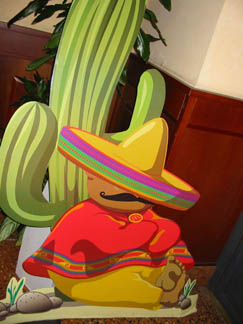
The traditional image of Mexicans is one of lazyness: a guy with a big "sombrero" and a sarape sleeping against a cactus. I think our real problem is one of perseverance: when necessary, we are able to start taking actions to solve our problems.


But sadly, we do not follow up. We build the road but don't give it maintenance. We created a Federal Elections Institute, but we didn't protect it so it wouldn't fall apart and loose all credibility. We created the Inmegen, but we don't guarantee it an appropriate building, personnel nor budget, and we don't ensure that budget is spent honestly.


What a waste.

(translated by Adrián Robles Benavides)

To receive Science for pleasure weekly
in your email, subscribe her


Wednesday, August 12, 2009

HIV: genomic confusion

By Martín Bonfil Olivera

Published in Milenio Diario, August 12, 2009


On August 6, the main science note on almost all media was a study of the genetic material of the human immunodeficiency virus, HIV.

The bad news is how this discovery was reported. Some sample headlines: "HIV genome deciphered"( BBC, picked up by newspapers such as Publimetro and radio shows like Hoy por hoy en la ciencia (Today in science), from UNAM and W Radio); "HIV genome, deciphered" ( El Clarín, Argentina). What is the problem? That it is incorrect: the full genome of HIV was decoded about 10 years ago. (A Mexican blog on internet even mentioned that "it has been confirmed that HIV uses RNA -ribonucleic acid- instead of DNA -deoxyribonucleic acid", something that has been known since the eighties.)

Some other media were more precise, though still not so clear: MILENIO Diario mentioned "the first HIV full map", "to create an image, not only of RNA nucleotides, but the forms and folds of the RNA strands". Excélsior, with the information from EFE news agency, used the following header: "AIDS virus genome structure decoded". And Spanish El mundo digital headlined "HIV genome, at bird's eye", and explained that "for the first time, the complete structure of HIV's genome was decoded and they got a clear image of its internal architecture".

Let's explain briefly:

HIV, unlike most organisms, does not have genes made of DNA , the famous double helix molecule, but of RNA, formed by only one chain, not two. The chemical links that form this chain are the "letters" in which genetic information is written, and this is what was deciphered years ago.

The discovery of researchers from North Carolina University headed by Kevin Weeks (and published on Nature magazine) is that the HIV RNA strand folds in a complex way: some parts pair up with others to form double helical stretches, for example.

When the virus penetrates a cell and its genetic information is read, these "knots" and rolls (technically known as "secondary structure") can delay the reading of the genes, and this can be fundamental to control how HIV proteins are manufactured.

In other words, a kind of "hidden code" was discovered on the virus' genome, which can be important not only to fight it, but also to better understand the control of genetic information in all types of organisms.

Unfortunately, to explain this with the necessary detail, more space is required than is normally available in news media. At the very least, we should try to be as precise as possible.

(translated by Adrián Robles Benavides)

To receive Science for pleasure weekly
in your email, subscribe here!


Monday, July 6, 2009

Predictive microbes

By Martín Bonfil Olivera

Published in Milenio Diario, July 1st, 2009


According to Wikipedia, it was Dutch cartoonist Robert Storm Petersen who said: "making predictions is hard… especially about the future."


True, but those who can predict the future with some reliability have better chances of surviving. That's why a lot of animals have developed the capacity of making predictions about their environment from information they obtain through their senses. (Science itself is a refined descendant of these biological survival mechanisms.)


Predictions can vary from the complex phenomenon of learning —what to do to obtain certain results— up to the conditioned responses discovered by Ivan Pavlov in the XIX century, which explains how dogs can "learn" to secrete saliva to the sound of a bell, even when there's no food near.


But to learn that when the sky gets cloudy I need to find cover, or to hate any food that has sometime made me sick, I need a nervous system.


Species that lack this system have to resign to "learn" more slowly, through natural selection: the environment eliminates individuals that react in the wrong way, and maintains the ones that get it right. Unfortunately, this form of "prediction" is not flexible, and big environmental changes exterminate a large part of the population, which are incapable of adapting quickly.


Amazingly, scientists of the Weizmann Institute of Israel have just published (Nature, June 17) that some microbes, such as intestinal bacteria Escherichia coli and brewing yeast Saccharomyces cerevisiae can "predict" changes that have not yet occurred in their environment, and activate in advance the genes they are going to need.


They achieve this through evolution: through natural selection, as experimentally confirmed, such microbes "learn", as a species, to associate environment stimuli with gene activation.


Of course, the trick only works in environments that present regular changes (such as the ones the bacteria encounter when passing through the various zones of our digestive tract, or the ones that the yeast causes when changing the temperature of its environment as they ferment the available sugars).


Even so, the lesson is clear: even brainless microbes can learn to predict, thanks to evolution.


(translated by Adrián Robles Benavides)

To receive Science for pleasure weekly
in your email, subscribe here!